Current status
February – December 2025
We are maintaining a dedicated Friday group with Ambro, Anton, Hans and Eric engaged in various projects, with future directions discussed together with Karin Hovius and the foundation board members.

Content table
- In memory of Arthur O. Bauer - February 2025
- Restructuring the main location - March 2025
- The depot with hidden treasures - March 2025
- Tube collection and 100W Sender - April 2025
- Outreach and collaborations - May 2025
- Depot insulation and TFb projects - June 2025
- Arthur’s radio setup moved in - August 2025
- First plans for 2026 - October 2025
- Radione and broadband cables - November 2025
- Hosting the STEN meeting - November 2025
- Towards the end of the year
- Hellschreiber and 30W Sender - December 2025
1. In memory of Arthur O. Bauer

We are deeply saddened to inform you that our chair and friend Arthur O. Bauer has passed away at the age of 82 years on Februari 5th 2025.
PA0AOB
This is an enormous loss for his wife Karin, his many friends and colleagues, and the international German communication community.
He was the driving force behind the foundation, author of various books on radio and radar equipment and usage, sharing knowledge with a large international community, and we will miss his warmth, enthusiasm, expertise and above all his friendship.
His work including the museum and website will be continued by the foundation CDV&T
Image by Gerard Vos (2019)
The Center for German Communications and related Technologies (CDV&T) will continue as a foundation to keep the unique collection, manuals and setting intact, including organizing meetings, posting new articles and scanned manuals, collaborating with other organizations and museums, and continuing the weekly Friday projects with Ambro, Anton, Hans, Eric and Karin.
2. Restructuring the main location
With parts of the collection distributed over three different locations, the Friday group took time to restructure the main location. The plan: create a library room for books, manuals and schematics; isolate the depot for storage and workspace; and reorganize the cellar for tubes, capacitors and electronic parts.
A separate room at the front of the building was cleared and fitted with bookcases and drawer units for hundreds of schematics and manuals. Books on German military radio and radar, radio technology, tube development, history and Dutch radio history will be placed here.


4. Tube collection and 100W Sender testing
Tubes stored across various locations are being merged and reorganized. This is a large task because the collection contains thousands of tubes.
RS237 tubes for the 100W Sender were tested. Some were leaking, visible as a blueish light, but most tubes performed well as shown by the antenna output.


5. Outreach and collaborations
Alongside the restructuring work, the foundation continues interacting with other organizations and welcoming interested individuals. After the summer break the group hopes to organize a symposium, likely together with friends from the Crypto Museum.
The foundation also helps with requests, including providing loan objects for movie productions (the 15 WSEb transceiver and the Hellschreiber ) and sending German radar-related items to the Yokohama WWII Japanese Military Radio Museum, run by Takashi Doi.


6. Depot insulation and TFb projects
Since March the team has mainly been busy insulating the depot at the end of the building. The room contains a large stock of radio equipment and spare parts, but temperature and humidity were not ideal for the instruments, the people working in winter, or the gas bill. Walls and ceiling were stripped and insulated, a new electricity network was installed, and a professional building inspection provided an overview of maintenance tasks and costs for the next 20 years.
Meanwhile the team continued selecting capacitors, tubes and books, and obtained new equipment for future projects. One example is a second TFb 4 carrier telephony set, so a working TFb 4 setup can be built alongside the existing TFb 2 equipment.
In July, benches and radio equipment from garage boxes are planned to move to the Klooster building, including the U-boat radio setup with a working Hellschreiber .


7. Arthur’s radio setup moved in moved in
Following reconstruction of the main CDV&T building, including the library and insulated depot, German WWII radio equipment from other locations was moved into the main building. This included the main setup used by late Arthur Bauer, which had been located in his own house and used weekly with the European Hellschreiber network.
The main instruments are the T200 FK39 Sender, the AS 60 Sender, the Kw.E.A . and E52 Köln receivers, and the Hellschreiber . The setup will be kept as Arthur used it and brought back into working order.
The group can now start dreaming again of restoration projects, exhibitions and other activities.


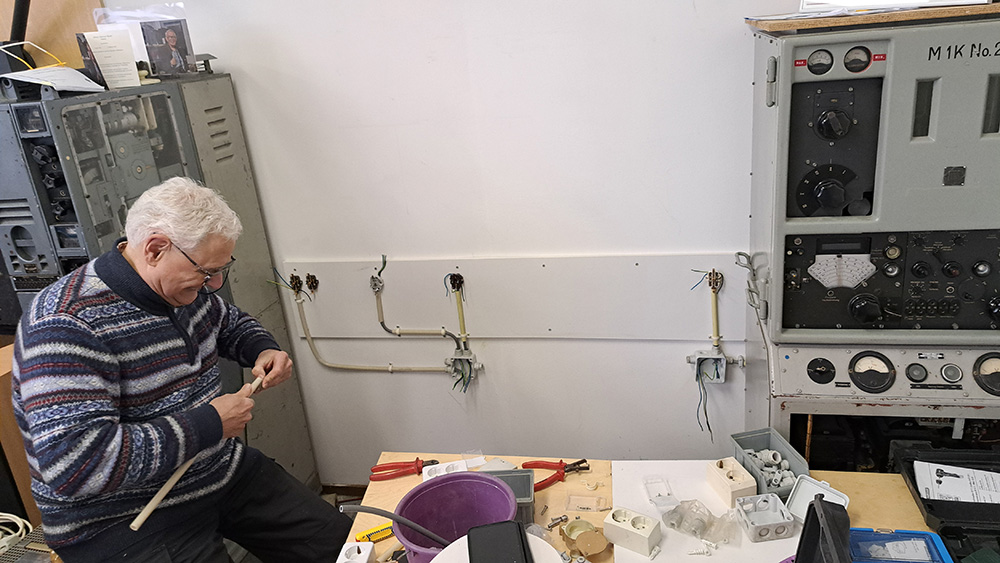
8. Plans for 2026 and a Morsebildschreiber
Since August the group has been finalizing reconstruction work, electricity and heating, and started a work plan for 2026 including projects, symposia and meetings. Possible activities include a Hellschreiber meeting, a radar-focused meeting, a meeting with the Crypto Museum, and open days for the general public.
Projects include continuing work on Feld.Fu radio sets, a Mutterkompass for the aircraft corner, and getting Arthur’s Hellschreiber back on the air. With several Hellschreibers around, the group also obtained a Morsebildschreiber . Some components are missing, but it will be a promising 2026 project.


9. Radione and broadband cables
Some setups have not been powered for a long time, so instruments will gradually be reactivated one by one. The Radione setup was a nice example: within minutes both the RS 20M transmitter and R3 receiver were in the air again.
The foundation received two pieces of broadband cable used in the Third Reich from Jürgen Bauch, author of books on Breitbandkabel . He is working on a volume about München–Salzburg–Wien, including the Obersalzberg , where information about cable connections remains scarce.


10. Hosting the STEN meeting
Our foundation https://www.cdvandt.org/ is member of a Dutch national network of foundations with focus on communication, often with the focus to keep the unique historic collection together and accessible for the general public ( Telecommunicatie Erfgoed Nederland ( sTEN ) https://www.telecomerfgoed.nl/ ). Collections dissappear , for example when the founder or main collector passes away, or when the building gets a new function... with the permanent loss of national technical heritage.
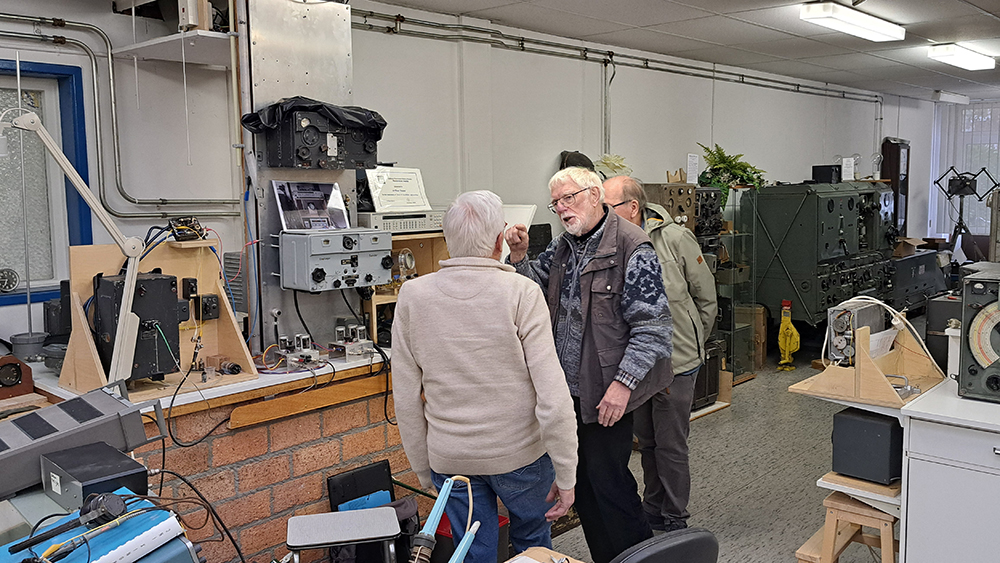
We hosted the meeting followed by a lunch and a guided tour through the Klooster by all Friday group members.
11. December 2025 — Year-end update
With the year coming to an end, the team looks back on a turbulent year. After Arthur’s passing in February, the work continued through the new foundation structure with a board, external experts, and a motivated Friday team.
The main focus was reconstructing the main location: moving German-related equipment and spare parts from various locations, insulating the depot, building a library for thousands of original manuals and books, modernizing electricity, and planning 2026 with a new website, new projects, symposia, meetings and more scanned manuals.
11. Hellschreiber and 30W Sender
Arthur’s radio shack was moved to the foundation location a few months earlier. Power supply units are being finalized to get the Hellschreiber on the air again.
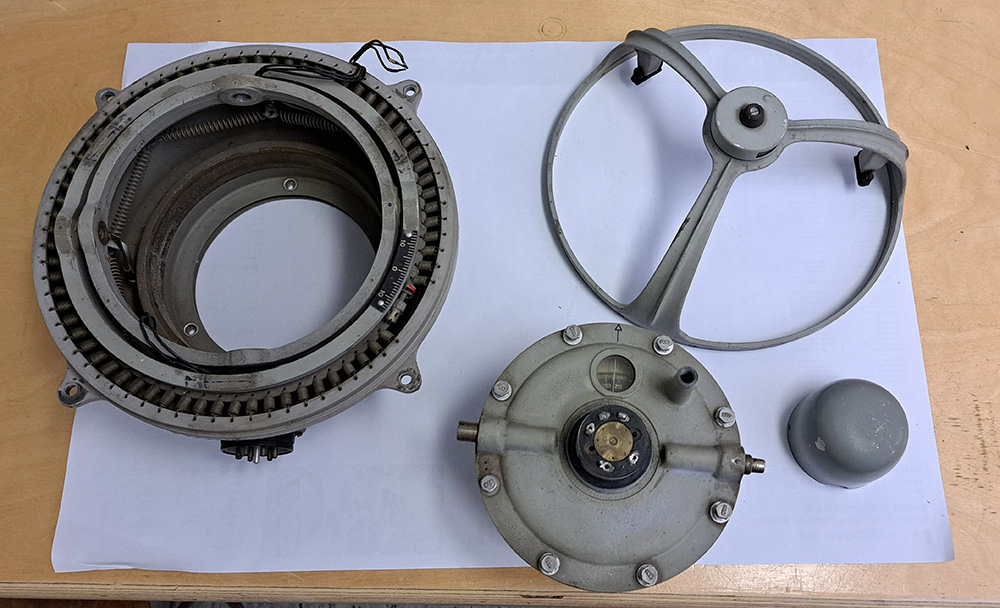
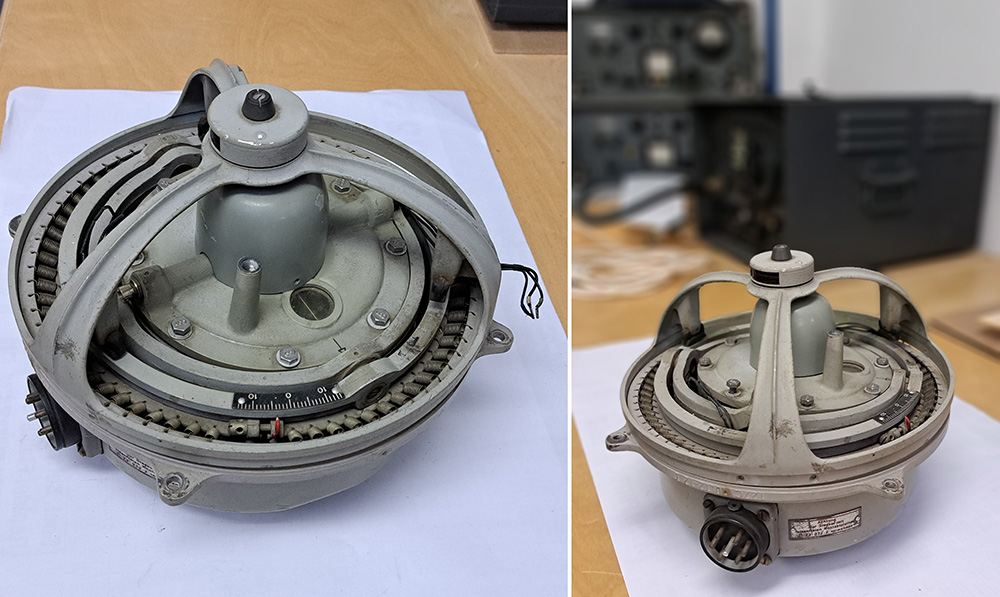
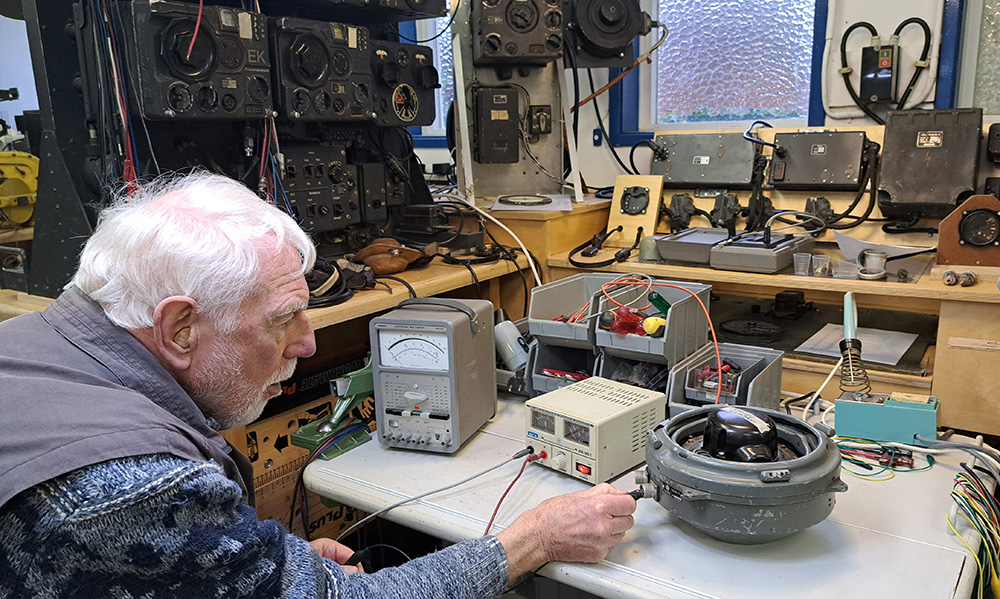
The aircraft setup will continue, including radio and navigation sets and a mother/daughter compass. The Mutterkompass was the primary magnetic compass used in German WWII Luftwaffe aircraft. The current example is not working, but a Russian variant is being tested by Hans and a dedicated article is planned for 2026.
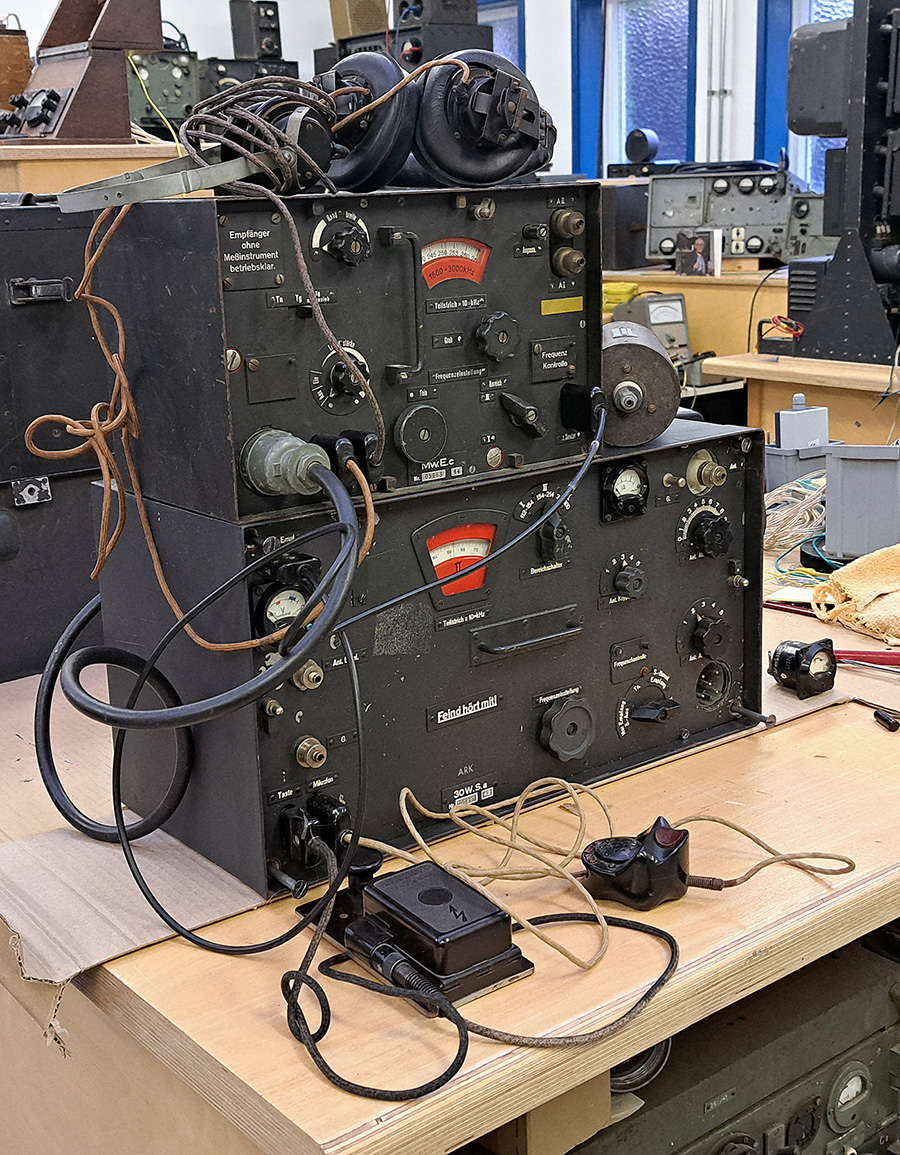
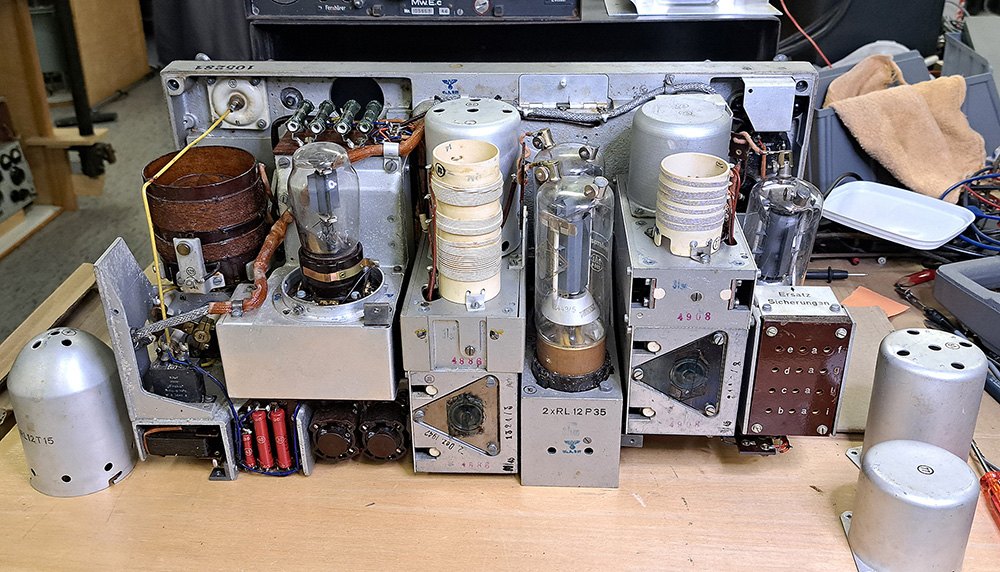
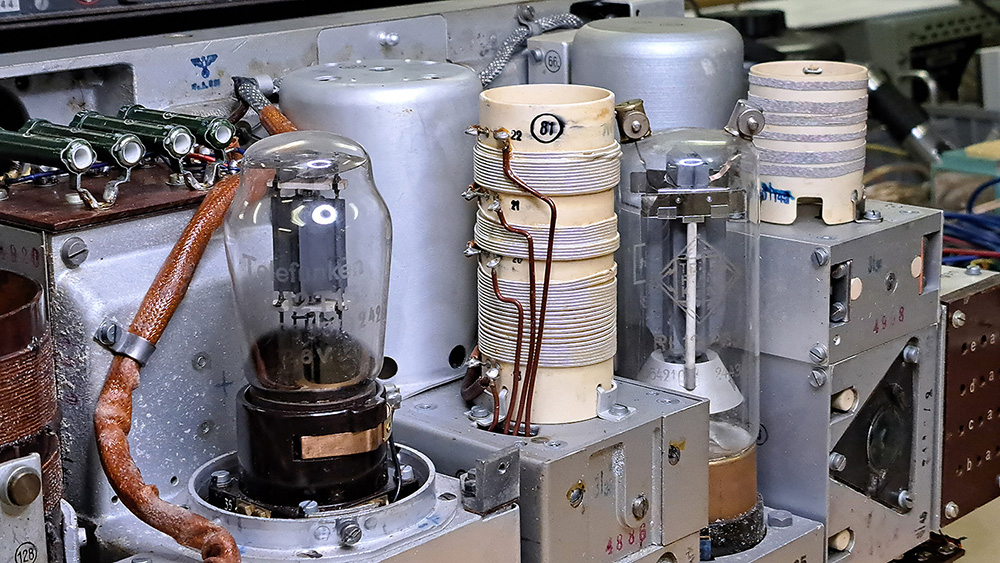
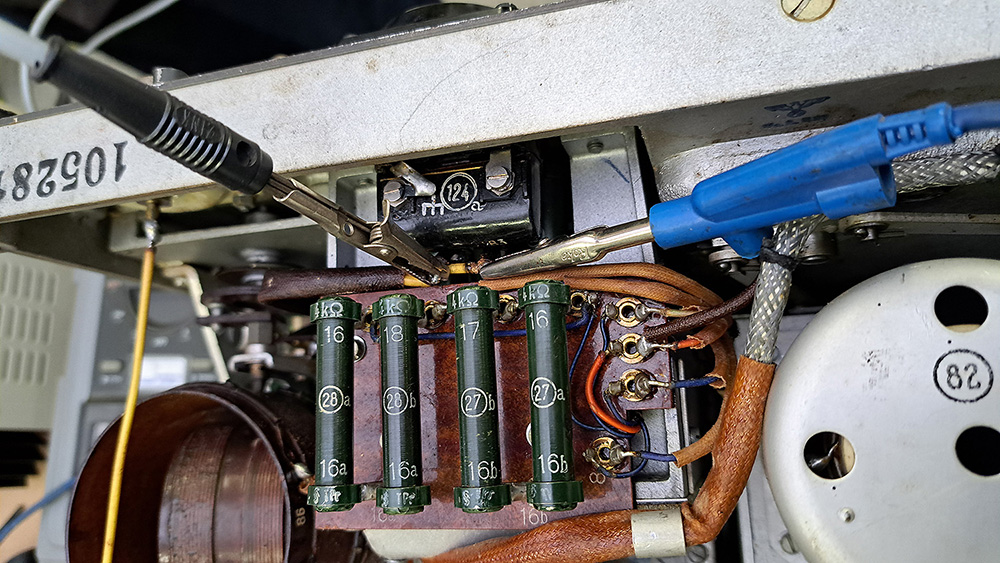
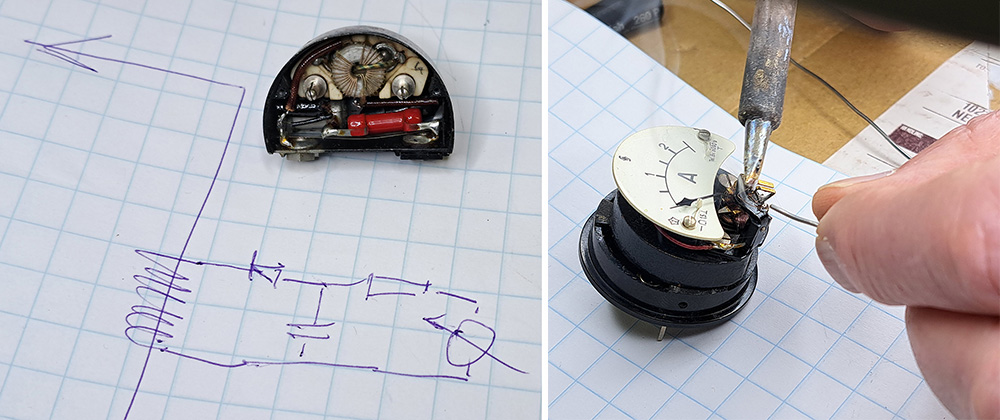
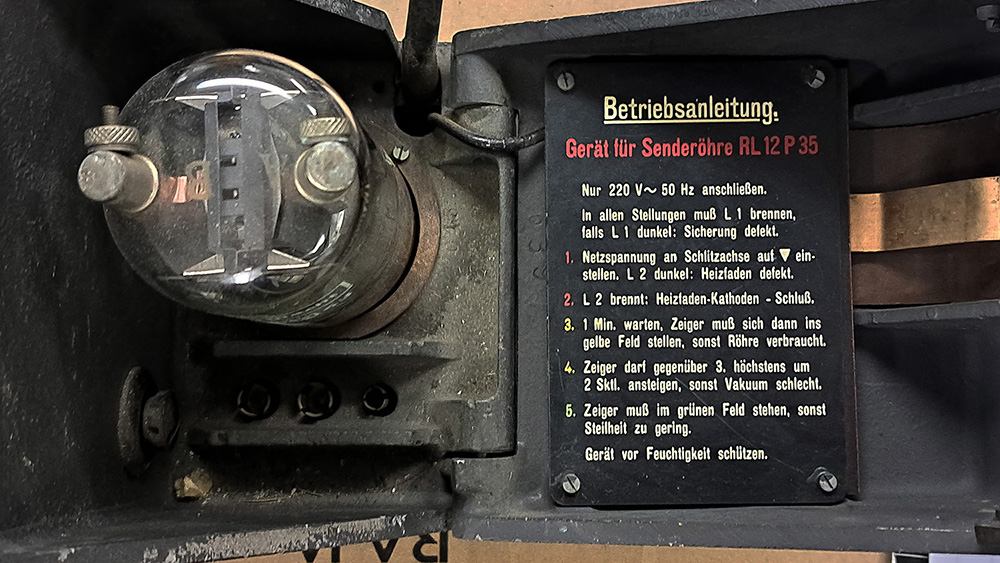
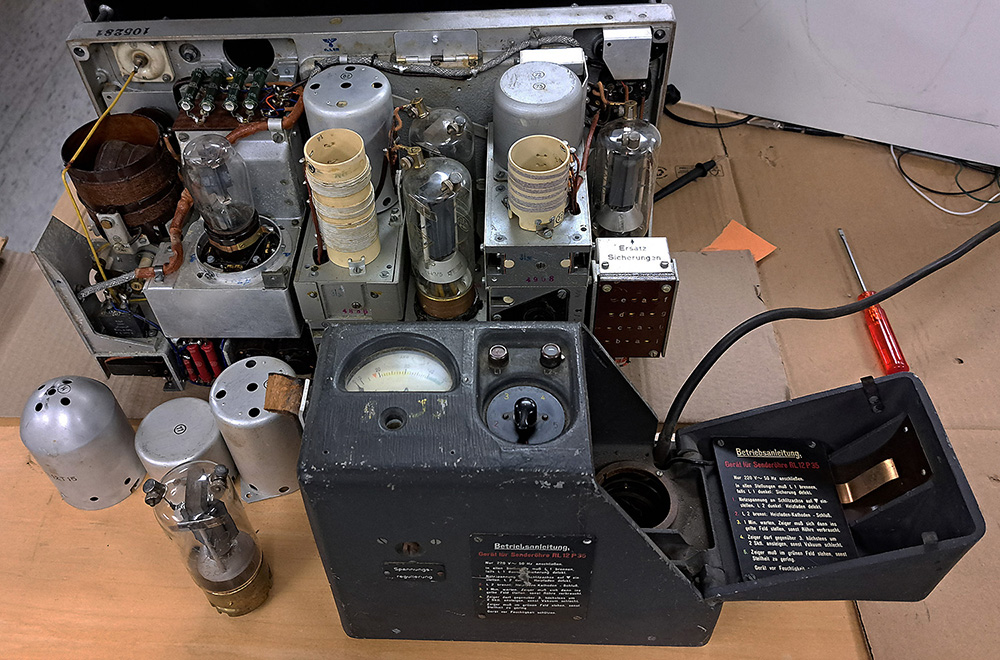
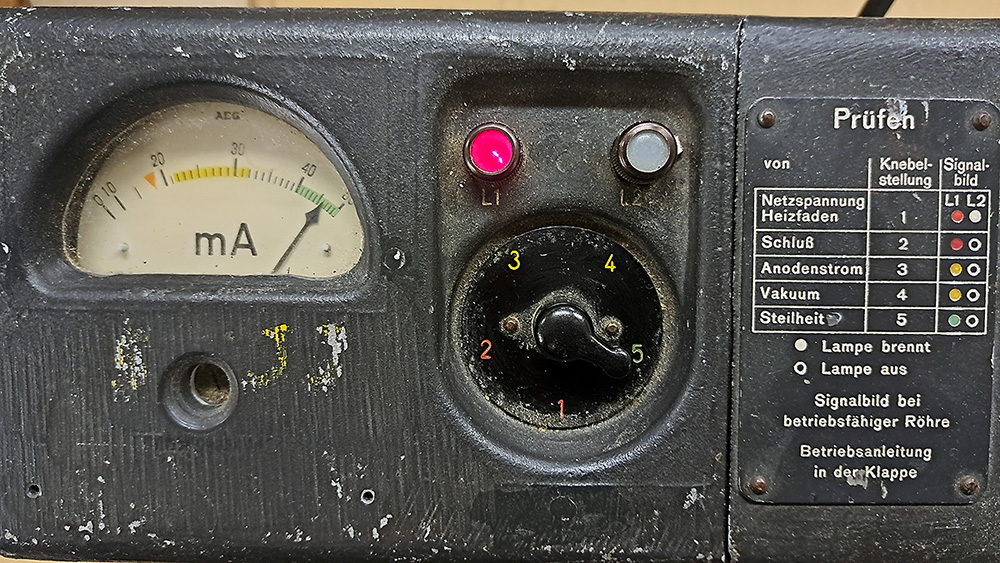
A 30W Sender was also obtained, completing the series of Wehrmacht transmitters ranging from 5W and 10W senders to 80W and 100W units used in armored vehicles. The Antennenstrom meter was inspected and repaired, and RL12P35 tubes were checked using the RPG2 tube tester.
The Mutterkompass
And reparing a 30W Sender:
Testing the RL12 P35 with a dedicated tube tester